Social & Emotional Readiness
Confidence starts with connection.
Children practice working cooperatively, taking turns, developing friendships, recognizing emotions, managing frustration, and resolving conflicts with increasing independence.
Success in School | Success in Life ®

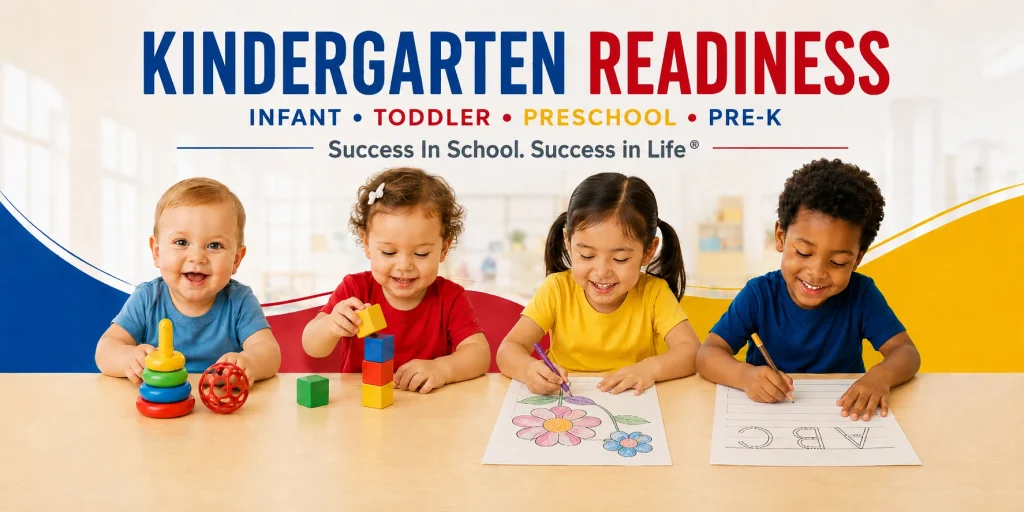
At The Weston School, our Preschool and Pre-K programs help children build the academic, social, emotional, and developmental skills they need for a confident transition to kindergarten. Through play-based learning, early literacy and math, STEAM exploration, problem-solving, classroom routines, and nurturing teacher guidance, children develop the independence, curiosity, and confidence to be ready for school—and excited to learn.
94%
Meeting / Exceeding
Kindergarten Readiness
94% of Pre-K children are meeting or exceeding widely held expectations across 10 key kindergarten-readiness dimensions.
Teaching Strategies GOLD® · Spring–Summer checkpoint · 138+ children assessed across Weston School centers
✔ Locally Owned Since 1986 ✔ Research-Based Early Childhood Education ✔ Five Convenient Central Indiana Locations ✔ Serving Infants, Toddlers, Preschool & Pre-K Families
A Confident Path to Kindergarten
Every stage builds on the last — so your child is ready, not rushed.
THE YEARS BEFORE KINDERGARTEN MATTER
Kindergarten readiness is about more than knowing letters and numbers—it’s about confidence, independence, communication, problem-solving, and learning how to thrive in a classroom.
The strongest school foundations are built before the first day of kindergarten.
At The Weston School, children are given opportunities to practice the skills they’ll use every day in kindergarten while developing the curiosity and confidence to keep learning.
Every child develops at their own pace. Our educators meet children where they are, help them build toward developmentally appropriate milestones, and partner with families throughout the process—so kindergarten readiness is something we build together, not something parents have to guess about.
Ready to see how The Weston School can help prepare your child for kindergarten and beyond?
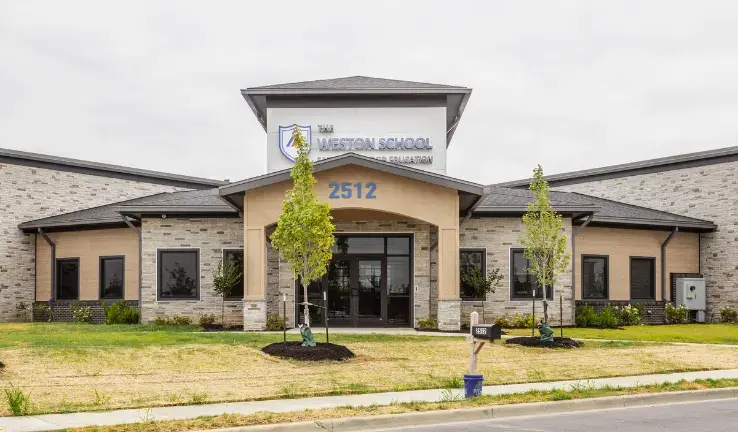
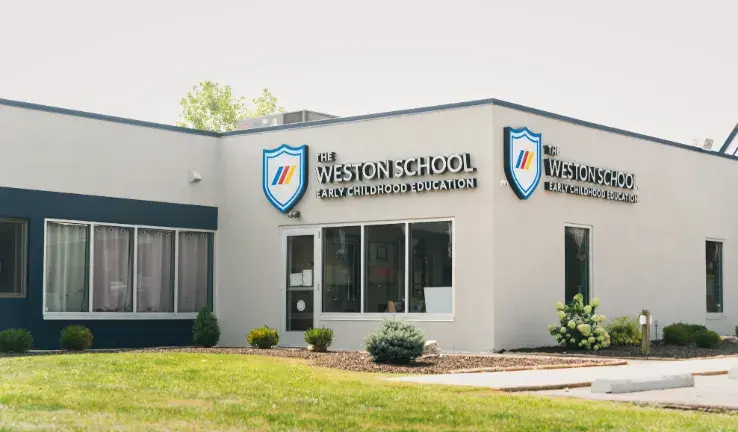
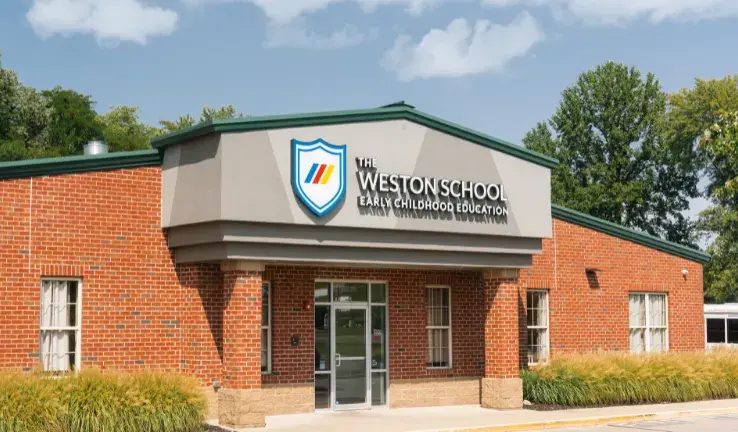
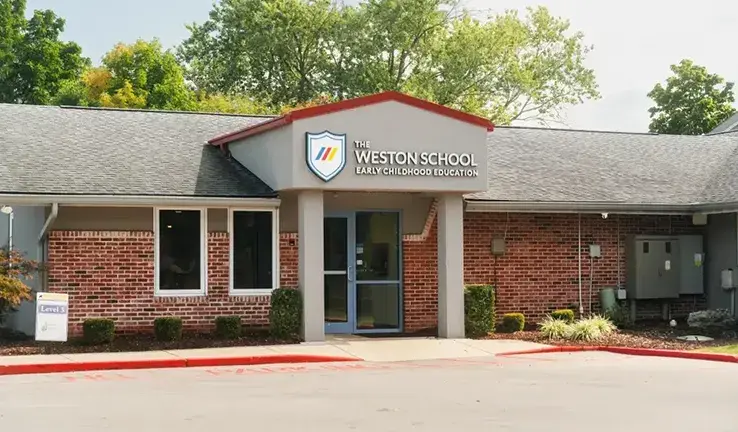
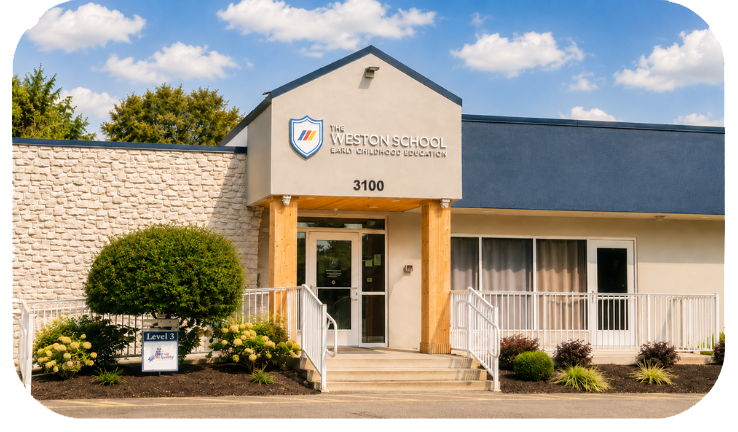
Parents aren't simply choosing a place for their child to spend the day. They're choosing the environment that will shape confidence, curiosity, friendships, communication skills, emotional development, and kindergarten readiness. At The Weston School, every classroom, lesson, interaction, and learning experience is intentionally designed to prepare children for success in school and success in life. Our experienced educators combine nurturing relationships with research-based curriculum to create a learning environment where children feel safe, supported, challenged, and excited to learn every day.
Kindergarten readiness is about more than recognizing letters, writing a name, or counting to 20. Children are also developing the communication, independence, self-regulation, problem-solving, physical, and social skills that help them participate confidently in a classroom. At The Weston School, we focus on the whole child because every area of development helps build the foundation for success in school and in life.
Confidence starts with connection.
Children practice working cooperatively, taking turns, developing friendships, recognizing emotions, managing frustration, and resolving conflicts with increasing independence.
Learning begins with listening and communicating.
Children build increasingly complex language, participate in back-and-forth conversations, tell stories, express ideas, ask questions, listen to others, and practice following multi-step directions.
The foundation for reading starts before kindergarten.
Children strengthen letter recognition, letter-sound awareness, print knowledge, rhyming, storytelling, early writing, name writing, and their ability to express ideas through pictures, letters, words, and symbols.
Math is about thinking—not memorizing.
Children count, connect numbers with quantities, identify shapes and patterns, compare and classify information, explore beginning addition and subtraction concepts, and strengthen reasoning through hands-on learning.
Knowing how to learn matters too.
Children practice classroom routines, transitions, group participation, following expectations, caring for belongings, making choices, completing age-appropriate tasks, staying engaged, and asking for help when needed.
Strong bodies and hands support classroom success.
Children strengthen coordination, balance, hand control, drawing, writing, cutting, and the fine-motor strength needed to confidently use classroom tools and learning materials.
Kindergarten readiness isn't about expecting children to already know everything. It's about helping them become confident, capable, curious, and ready to learn.
HOW WE BUILD READINESS
Purposeful learning. Play-based experiences. Individualized growth.
Learning Through Experience, Academics & Play
✓ Research-Based Creative Curriculum®
✓ Early Literacy, Math & STEAM Learning
✓ Social-Emotional & Self-Regulation Development
✓ Individualized Learning & Developmental Goals
At The Weston School, kindergarten readiness is intentionally built into everyday learning. Our LEAP approach combines hands-on exploration, structured learning, purposeful play, teacher-guided instruction, and meaningful social experiences to help children develop academically, socially, emotionally, cognitively, and physically.
Teachers observe each child’s progress, provide developmentally appropriate challenges, and partner with families to support continued growth at school and at home.
At our most recent checkpoint, we assessed 138+ children across every Weston School center against ten widely held expectations for kindergarten readiness. Here’s how they did.
Children express emotions in appropriate ways.
Children play and interact cooperatively with others.
Children understand and follow multi-step directions.
Children use age-appropriate grammar in speech.
Children focus and stay engaged in learning activities.
Children recognize and name uppercase and lowercase letters.
Children connect letters to the sounds they represent.
Children recall key details and tell stories in sequence.
Children write their first and last name.
Children count to 10 and beyond.
Source: Teaching Strategies GOLD® assessment, Spring–Summer checkpoint. Based on 138+ children assessed across all Weston School centers. Teaching Strategies® and GOLD® are registered trademarks of Teaching Strategies, LLC.
At The Weston School, our Preschool and Pre-K programs help children build the academic, social, emotional, physical, and classroom skills that support a confident transition to kindergarten.
Through play-based learning, early literacy, math, STEAM, problem-solving, social-emotional development, classroom routines, and nurturing teacher guidance , children develop the confidence, independence, curiosity, communication skills, and foundational knowledge they need to be ready to learn.
Every child develops at their own pace. Our educators meet children where they are, observe their progress, provide developmentally appropriate challenges, and partner with families to support continued growth at school and at home.
Kindergarten readiness isn't about knowing everything before kindergarten. It's about being ready to learn when they get there.
Our enrollment specialists are here to help you make a confident, informed decision for your child’s future.
Whether you're exploring infant care, preschool, or Pre-K, we'll help you find the program that's right for your child and your family.
Our team is happy to answer questions and guide you through next steps.
KINDERGARTEN READINESS QUESTIONS, ANSWERED
Preparing for kindergarten can bring a lot of questions. What should your child know? How important are social skills? Should they already be reading? When should preparation begin? These answers are designed to help Central Indiana families understand kindergarten readiness and how The Weston School supports children as they build the confidence, independence, academic foundations, and classroom skills they will use in kindergarten and beyond.
Kindergarten readiness means a child is developing the skills, behaviors, confidence, and independence needed to participate successfully in a kindergarten classroom. It includes early literacy and math, but also communication, social-emotional development, physical skills, self-regulation, problem-solving, curiosity, independence, and the ability to participate in classroom routines.
Indiana describes kindergarten readiness as preparation across the full range of early learning and development. At The Weston School, we take the same whole-child approach rather than treating readiness as a single academic checklist.
There is no single skill that determines whether a child is ready for kindergarten. Children approaching kindergarten are typically developing skills across language, literacy, mathematics, social-emotional development, physical development, reasoning, independence, and approaches to learning.
At The Weston School, Pre-K children work toward skills such as recognizing letters and many letter sounds, writing their name, counting to 20, recognizing numbers and shapes, following multi-step directions, participating in conversations, solving problems, working cooperatively with peers, and demonstrating growing self-regulation.
Every child develops at their own pace, so readiness should be viewed as a developmental process rather than a pass-or-fail test.
A child does not need to enter kindergarten already reading independently to be developing strong kindergarten-readiness skills.
Before kindergarten, children build the foundations for reading through letter recognition, letter-sound awareness, rhyming, vocabulary, storytelling, print awareness, listening to books, retelling stories, early writing, and understanding that written words carry meaning.
The Weston School helps children develop these early literacy foundations through developmentally appropriate, play-based and teacher-guided learning experiences.
Social-emotional skills are a major part of kindergarten readiness because children learn in a classroom community.
Children benefit from being able to take turns, communicate their feelings, work cooperatively, build relationships, manage frustration, follow expectations, transition between activities, and begin solving social problems with increasing independence.
The Weston School intentionally supports self-regulation, cooperation, communication, empathy, relationships, and conflict-resolution skills alongside academic learning.
Children approaching kindergarten are building foundational math understanding rather than simply memorizing numbers.
At The Weston School, Pre-K children work toward counting to 20, understanding one-to-one correspondence, recognizing numbers 0–10, identifying basic shapes, recognizing and creating patterns, comparing and sorting information, and exploring beginning addition and subtraction concepts.
Hands-on activities help children understand how numbers, quantities, shapes, patterns, and relationships work.
Communication plays an important role in both learning and relationships.
Children approaching kindergarten are developing the ability to speak clearly in complete and increasingly complex sentences, participate in back-and-forth conversations, tell and retell stories, ask and answer questions, express ideas and needs, listen to others, and follow multi-step directions.
These skills help children communicate with teachers, participate in classroom discussions, build friendships, and understand instructions.
Kindergarten readiness includes knowing how to participate in a classroom, not just knowing academic information.
Children benefit from practicing routines, transitions, group participation, listening, following directions, completing age-appropriate tasks, caring for their belongings, making choices, staying engaged, asking for help, and becoming increasingly independent.
At The Weston School, these skills are developed naturally through daily classroom experiences, small-group learning, whole-group activities, individual instruction, and play.
Preschool helps establish many of the foundational skills that Pre-K later strengthens.
The Weston School Preschool program supports cooperative play, classroom routines, emotional awareness, communication, fine-motor development, problem-solving, early literacy, early number concepts, shapes, patterns, storytelling, and independence.
These early experiences create a developmental foundation children can continue building upon as they move toward Pre-K and kindergarten.
At The Weston School, Preschool generally supports children around ages 3–4, while Pre-K is designed for children around ages 4–5 who are approaching kindergarten.
Preschool builds foundational communication, social-emotional, physical, cognitive, literacy, and math skills. Pre-K builds upon those foundations with increasingly complex language, reasoning, early literacy, mathematics, self-regulation, independence, classroom participation, and kindergarten-transition skills.
Preschool builds the foundation. Pre-K strengthens the bridge to kindergarten.
The Weston School combines intentional teaching with hands-on, play-based learning.
Children develop through early literacy, mathematics, STEAM exploration, communication, social-emotional learning, problem-solving, physical and fine-motor development, classroom routines, individual experiences, small-group instruction, whole-group learning, and child-initiated play.
Our LEAP approach—Learning through Experience, Academics, and Play—integrates research-based early childhood practices and Creative Curriculum to help children develop academically while maintaining the curiosity, creativity, confidence, and joy that make young children eager to learn.
The Weston School uses developmentally appropriate observation and assessment to understand each child’s progress, strengths, and areas where additional support or challenge may be helpful.
Teachers use that information to help individualize learning experiences and communicate with families about their child’s development. Parent-teacher conversations, progress updates, developmental goals, learning resources, and home-school partnership help families remain involved throughout the process.
The goal is not to compare children with one another. The goal is to understand where each child is and help them continue moving forward.
Parents can support kindergarten readiness through simple everyday experiences.
Reading together, having conversations, encouraging questions, counting everyday objects, drawing and writing, practicing routines, helping children name emotions, encouraging imaginative play, giving children age-appropriate responsibilities, and allowing them to solve manageable problems all support development.
Parents do not need to recreate a classroom at home. Consistent conversation, reading, play, routines, encouragement, and opportunities for independence can have tremendous value.
Kindergarten readiness develops over years, not during the final few weeks before kindergarten.
Language, relationships, motor development, curiosity, independence, self-regulation, communication, and problem-solving begin developing long before Pre-K. Preschool and especially the year before kindergarten provide important opportunities to intentionally strengthen these skills in a classroom environment.
The goal is not to rush children toward kindergarten. It is to give them developmentally appropriate experiences that help them become ready for what comes next.
The Weston School serves families across Central Indiana with locations in Avon, Indianapolis, Noblesville East, Noblesville West, and Speedway.
Our early childhood education programs help children build the academic, social-emotional, communication, physical, cognitive, and classroom skills that support kindergarten readiness. Program availability and classroom openings may vary by location and age group.
Families can schedule a tour to visit their nearest Weston School, meet the team, explore the learning environment, and discuss their child’s developmental and educational needs.
The best way to evaluate an early childhood program is to experience it firsthand.
During a Weston School tour, families can explore the classrooms, learn about our curriculum and approach to kindergarten readiness, meet educators and school leadership, ask questions about their child’s development, and discuss their goals for Preschool or Pre-K.
A strong fit should give parents confidence not only in where their child will spend the day, but in how that environment will help their child learn, grow, build relationships, and prepare for what comes next.
Schedule a tour of The Weston School to start the conversation.